Baby Circle

INTRODUCTION

For my final capstone design project, I collaborated within a team of five designers to research, design, and prototype a product supporting parents in their transition to parenthood.

My Role
UX Researcher, UX/UI Designer

I was responsible for primary and secondary research and played a key role in shaping the project’s final design aesthetic and interface.
Project Scope
4 UX/UI designers and 1 project manager.
3 months.
Tools
Figma, Figjam
The Problem

After childbirth, many first-time parents face profound lifestyle and identity shifts as they adjust to the demands of caring for a newborn.

Competing advice and expectations shaped by cultural norms and commercialised ideals of parenthood can magnify self-doubt, overshadowing the realities of parental wellbeing.

As a Dr Gabor Maté, childhood development physician, says: “If you’re stressed, so is your child”
How might we promote the wellbeing of first-time parents in their transition after childbirth through integrated support that aligns with everyday caregiving moments?
The Solution – Baby Circle

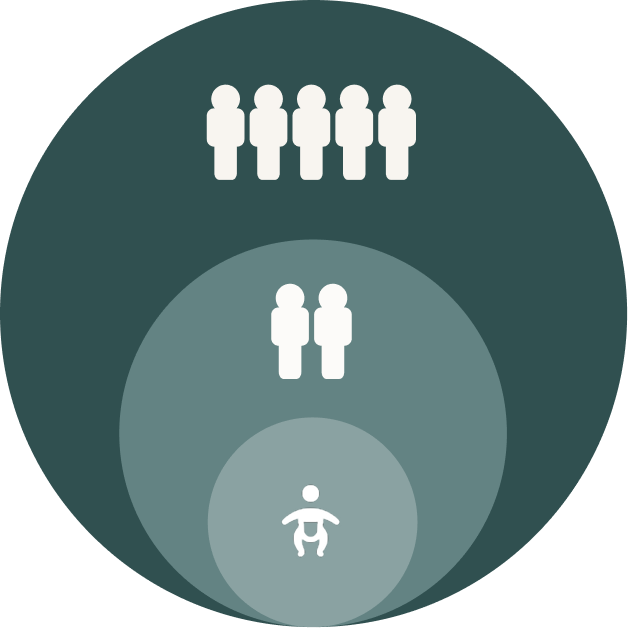
Each circle represents a different caregiving relationship, with the baby at the centre

With a plethora of first-time parent struggles revealed in our research, Baby Circle tackles an interconnected one – leveraging existing relationships for support and improving the ones that support the child. This is mapped to different circles, mirroring the real-life experience of parents’ need to feel supported through different aspects of their care-taking journey.
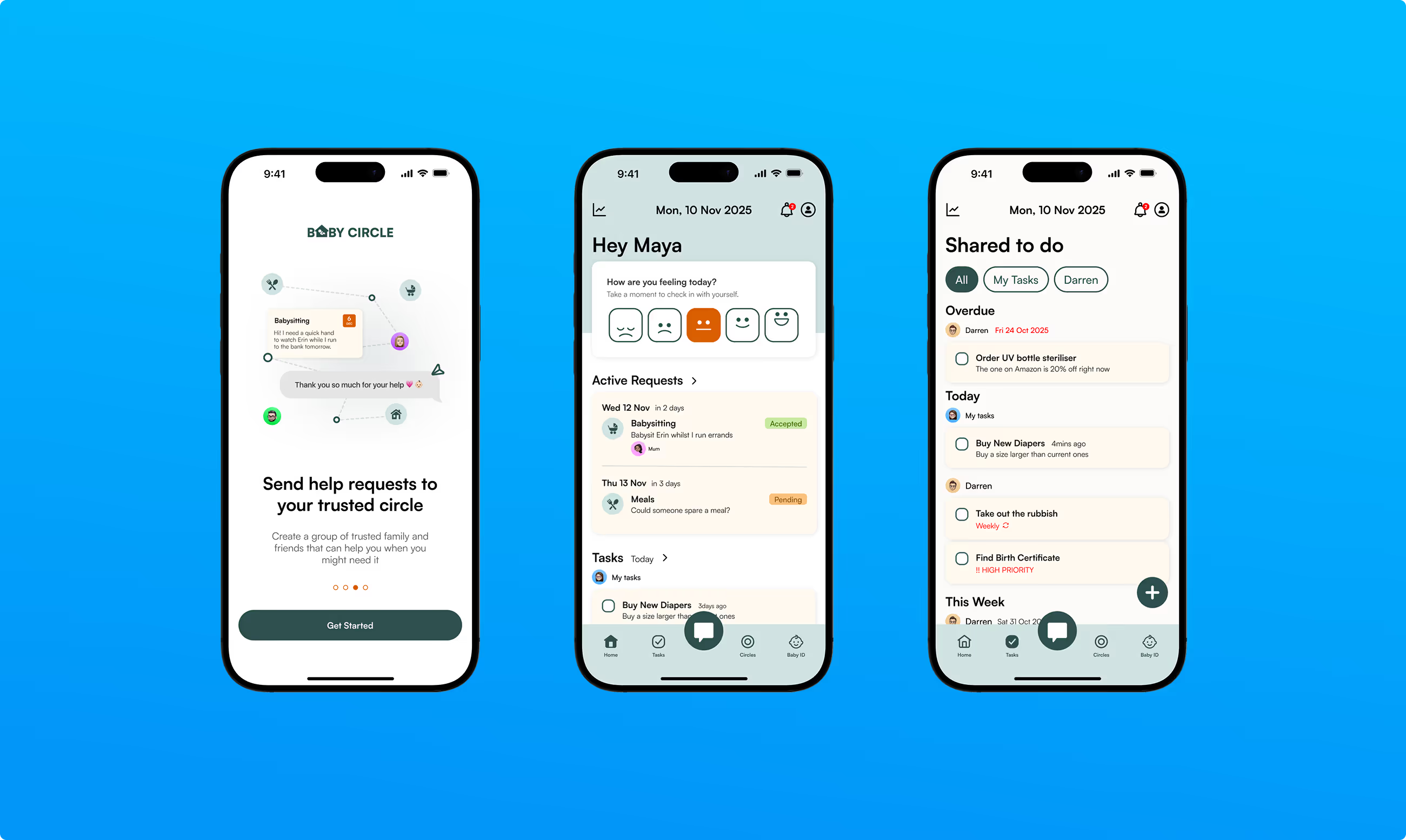
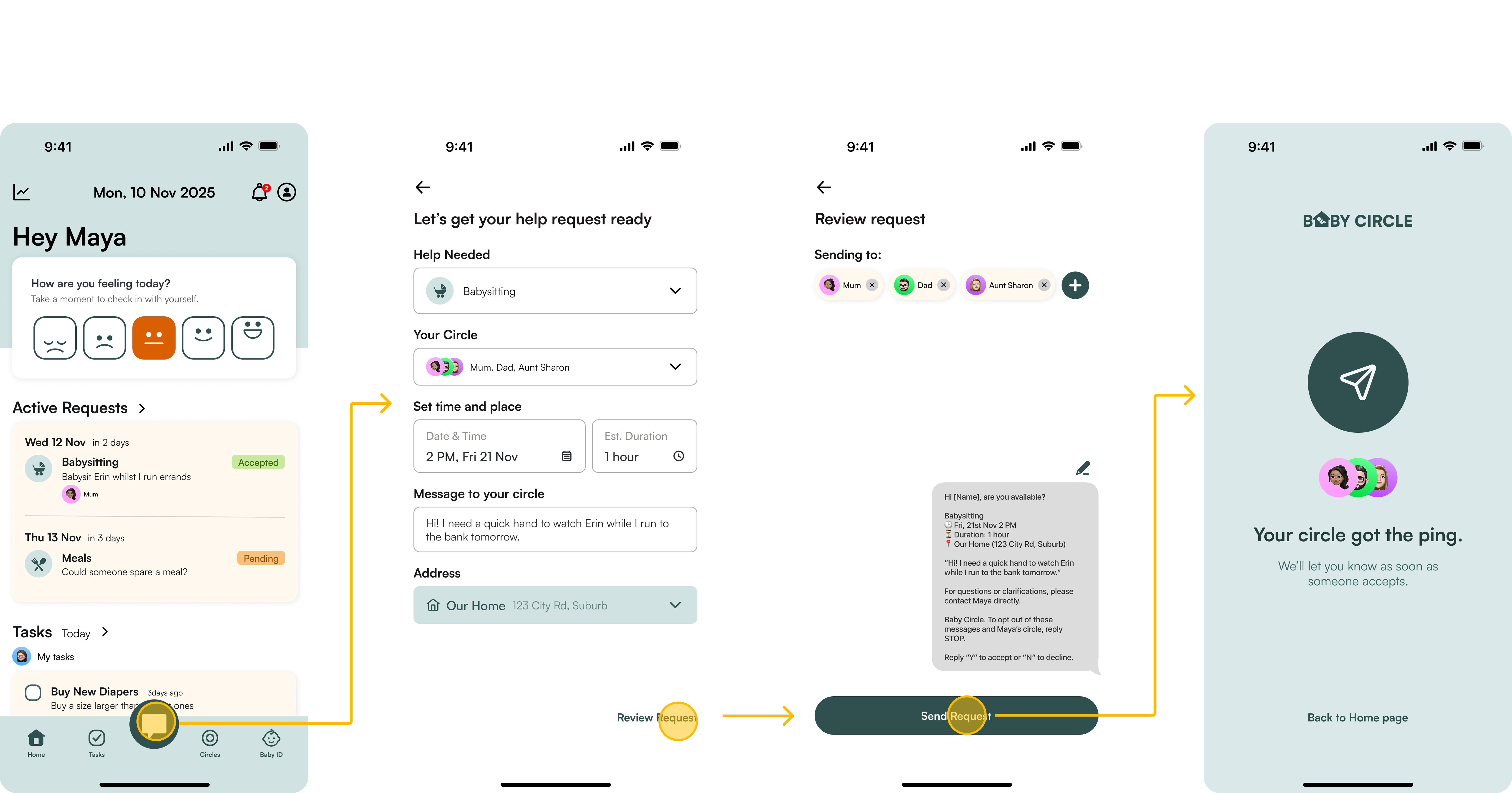
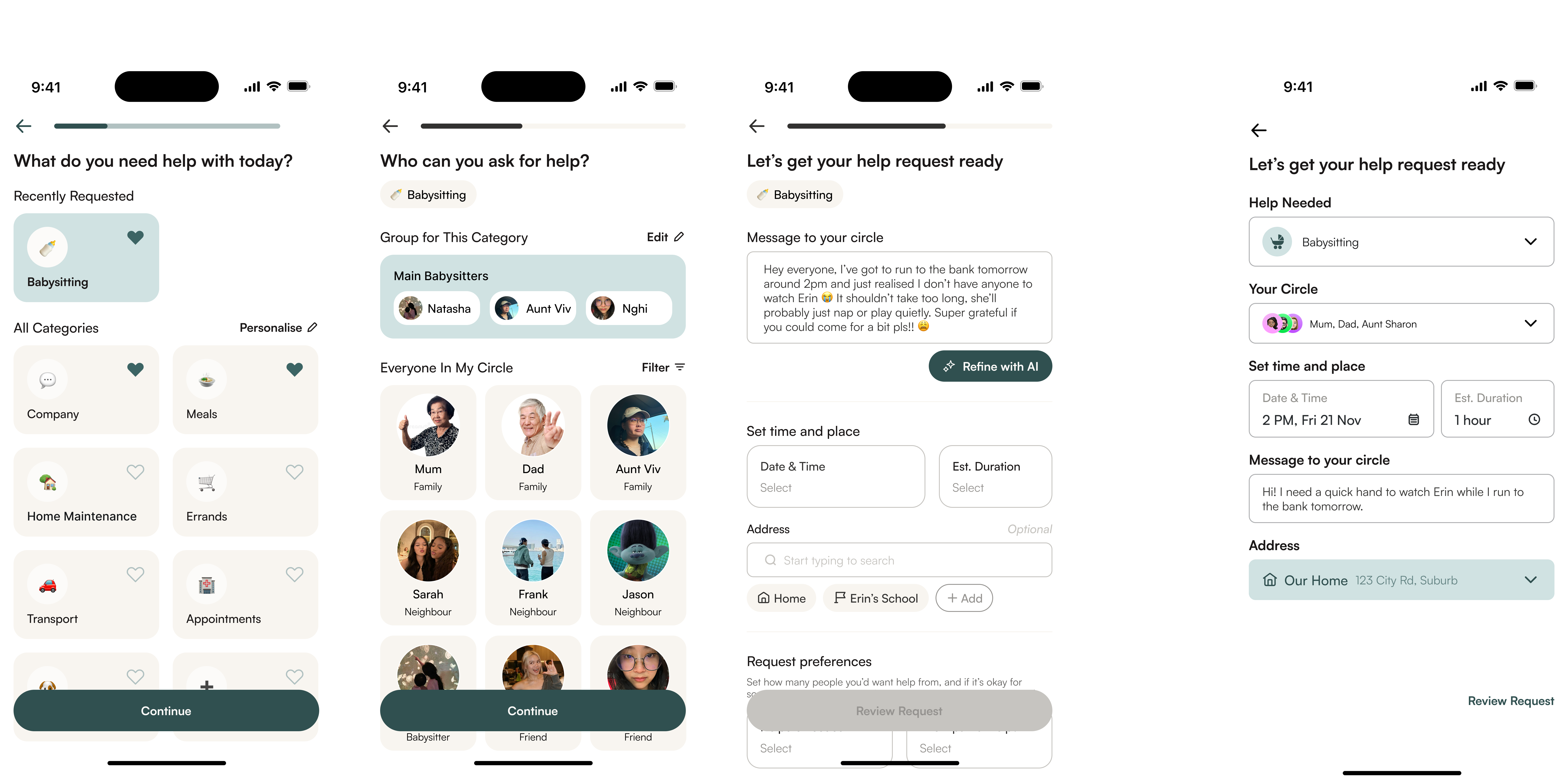
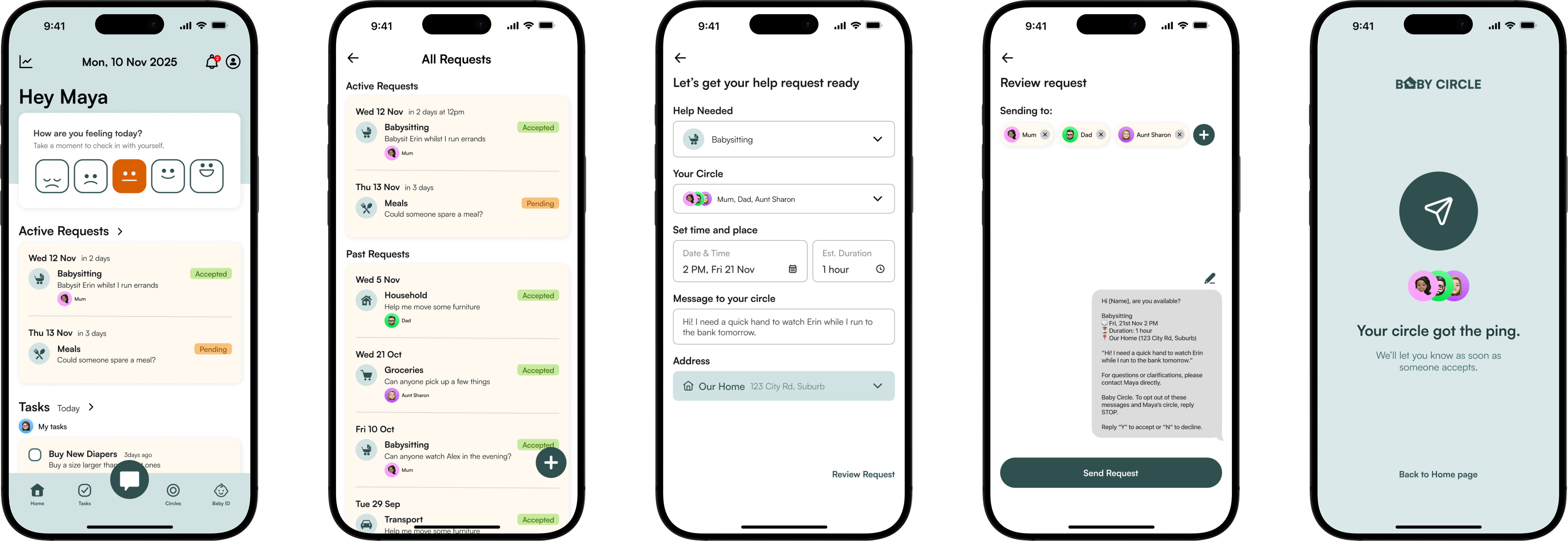
Mass Help Request

Normalise and streamline help seeking

  • Automated text message to chosen contacts when you need it
  • Recipients don't need to download the app
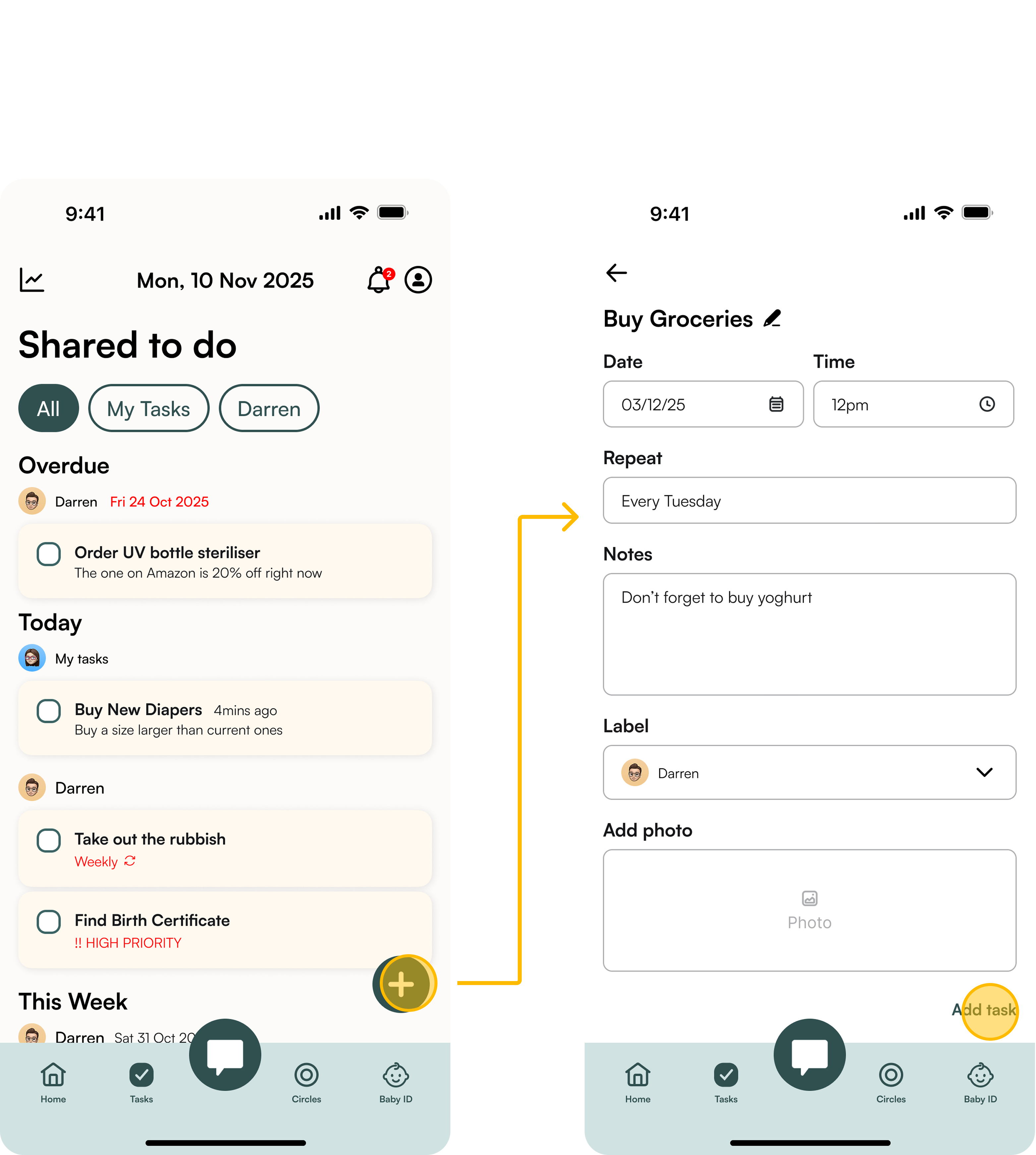
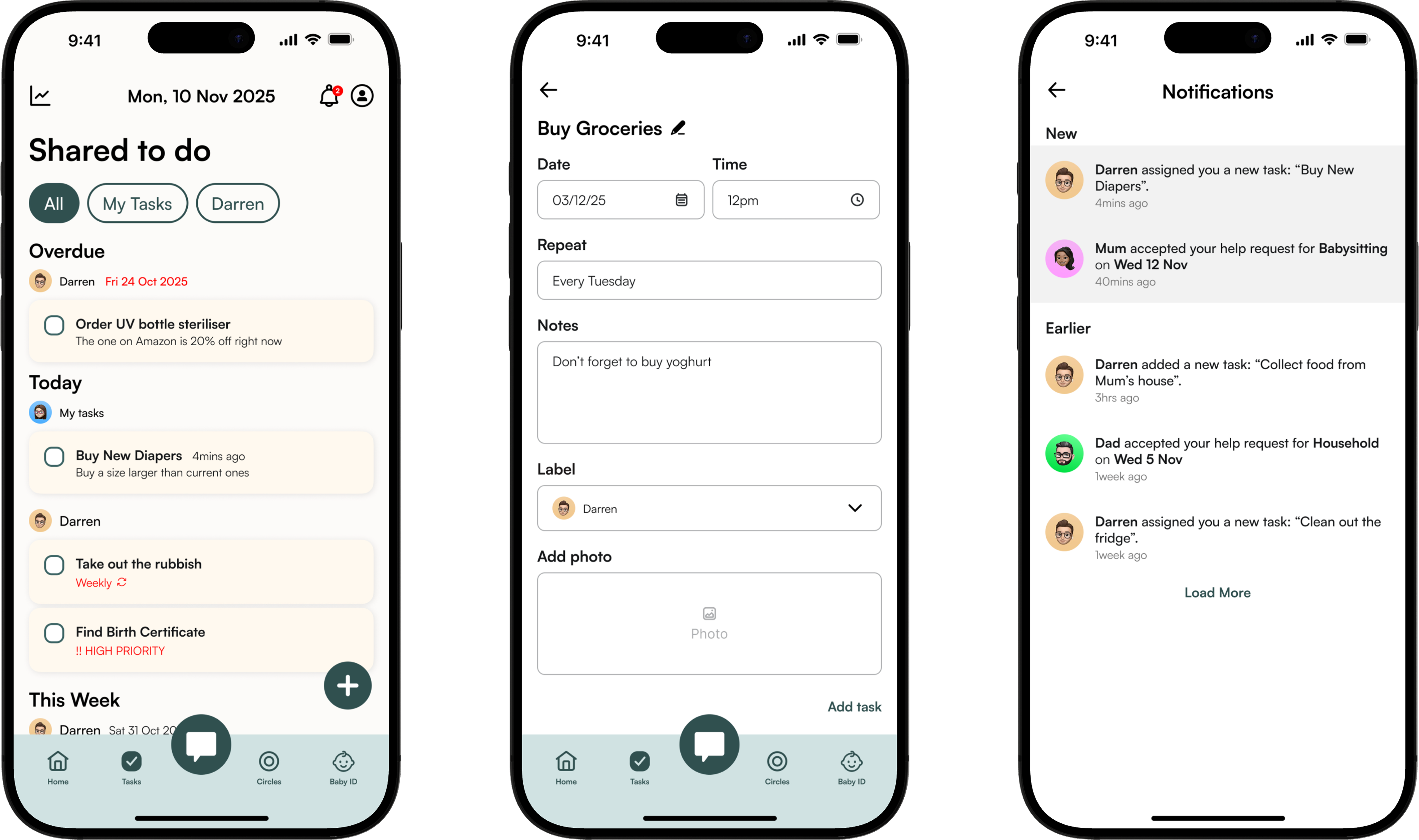
Shared To-Do List

Staying Co-ordinated

  • Both parents to collaboratively manage and track tasks
  • Eases the stress the tasks between parents
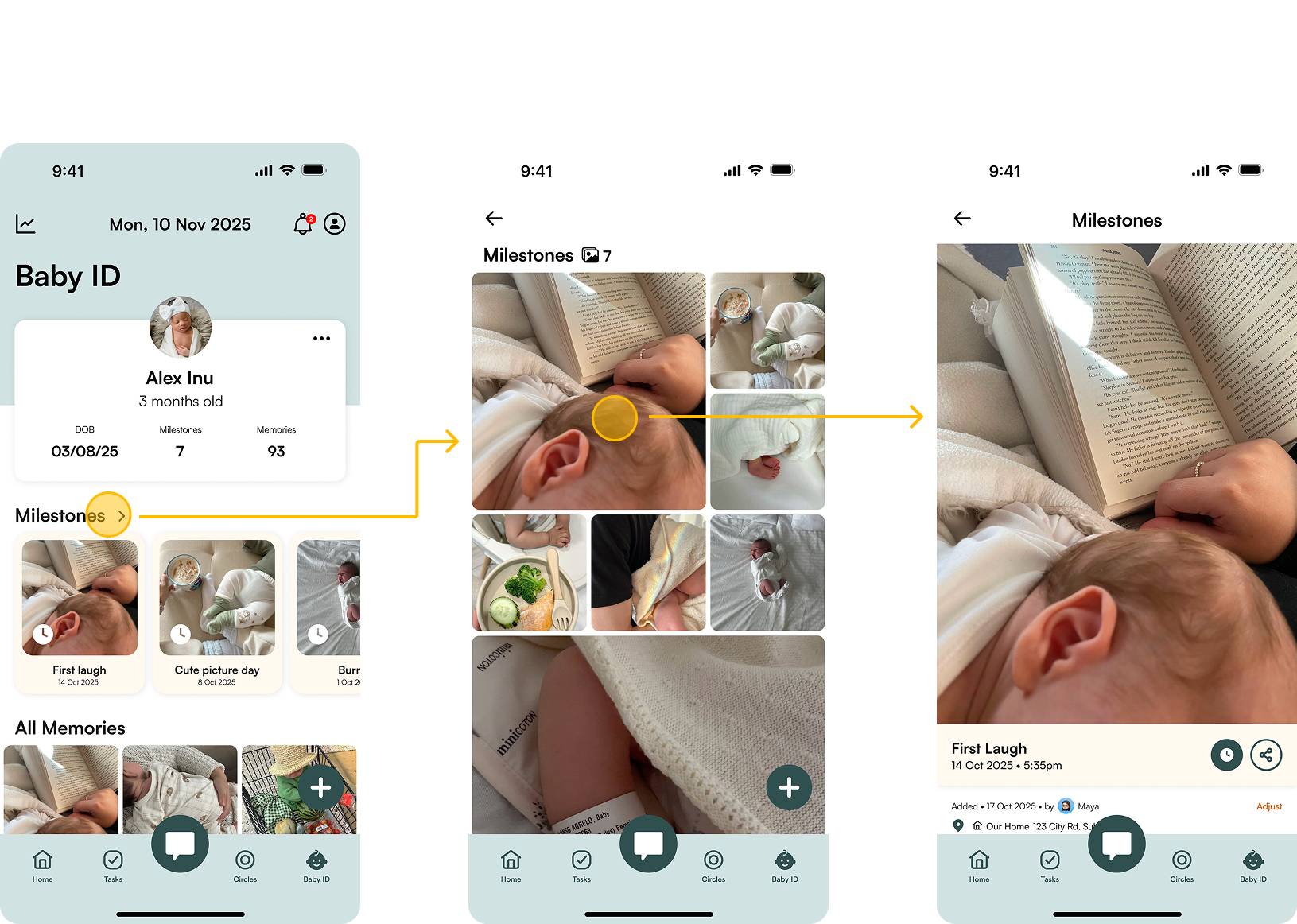
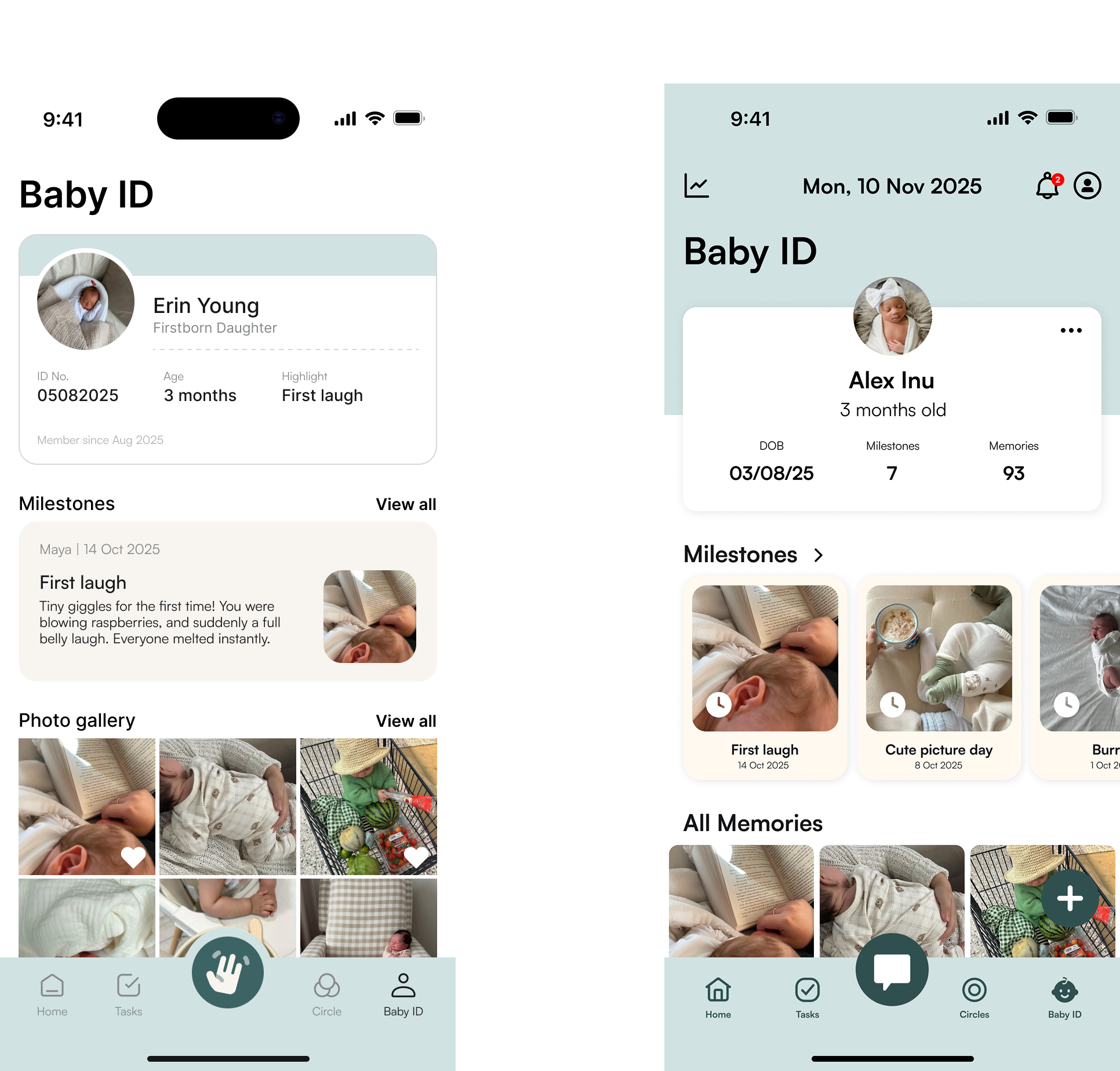
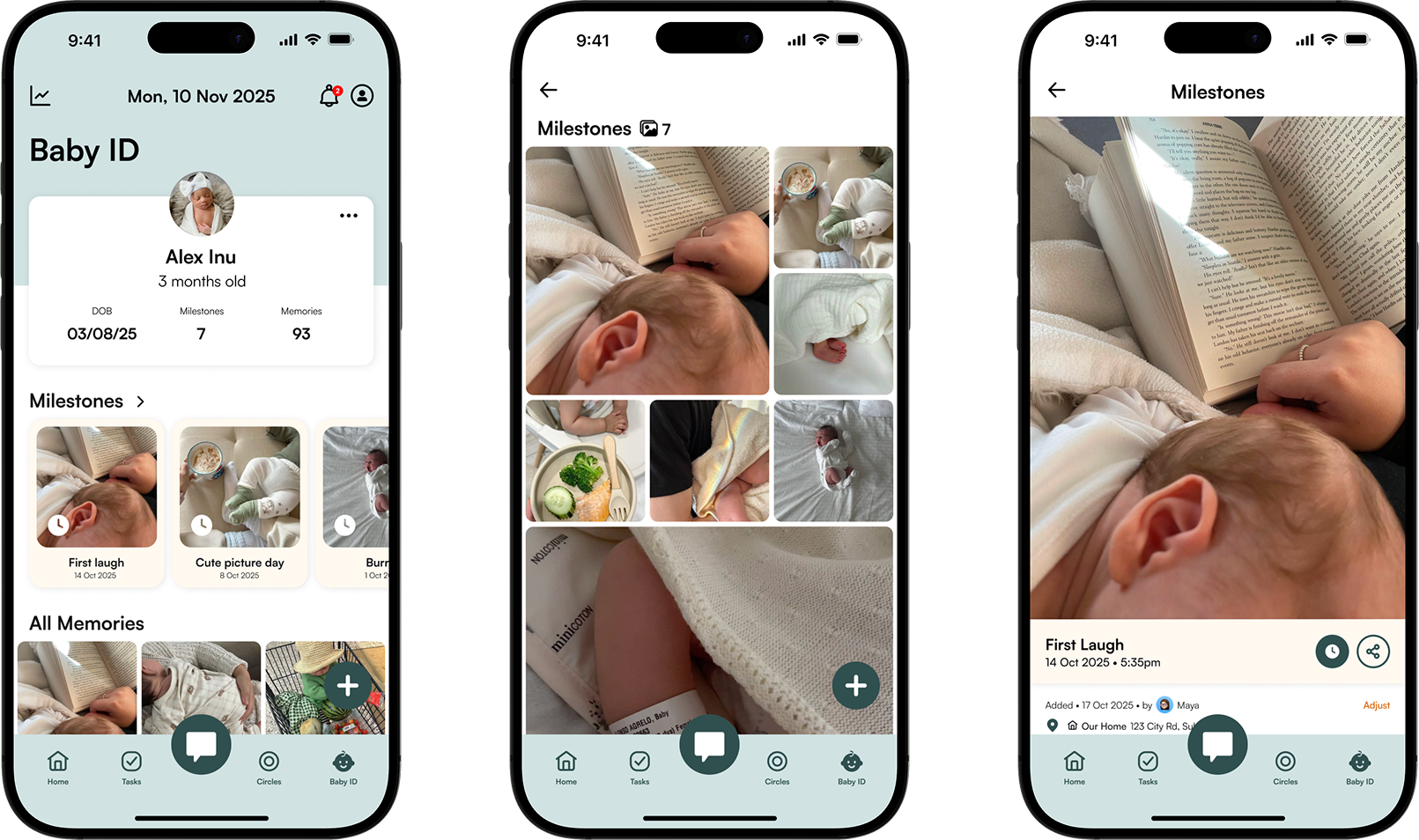
Baby ID

Saves Fading Memories

  • Designated baby album
  • Label milestones and share them with your spouse
PROCESS
Research

Research revealed a paradox: although parental wellbeing is consistently overlooked, parents themselves rarely frame this as a priority

Therefore, we recognised that if design interventions are positioned explicitly as “support for parents,” they risk being rejected or even stigmatised.

Rather than targeting parents directly, effective designs must be embedded into child-centred experiences, where the visible benefit is for the child, but the invisible outcome is reduced strain and strengthened resilience for parents.
Competitor Analysis

Our research shows an abundance of support services in early and new-time parenthood

Competitor services and apps primarily focus on emotional and informational support, with limited tools of accessing trusted, practical help.
Huckleberry
Early Years SA App
Baby Makes 3
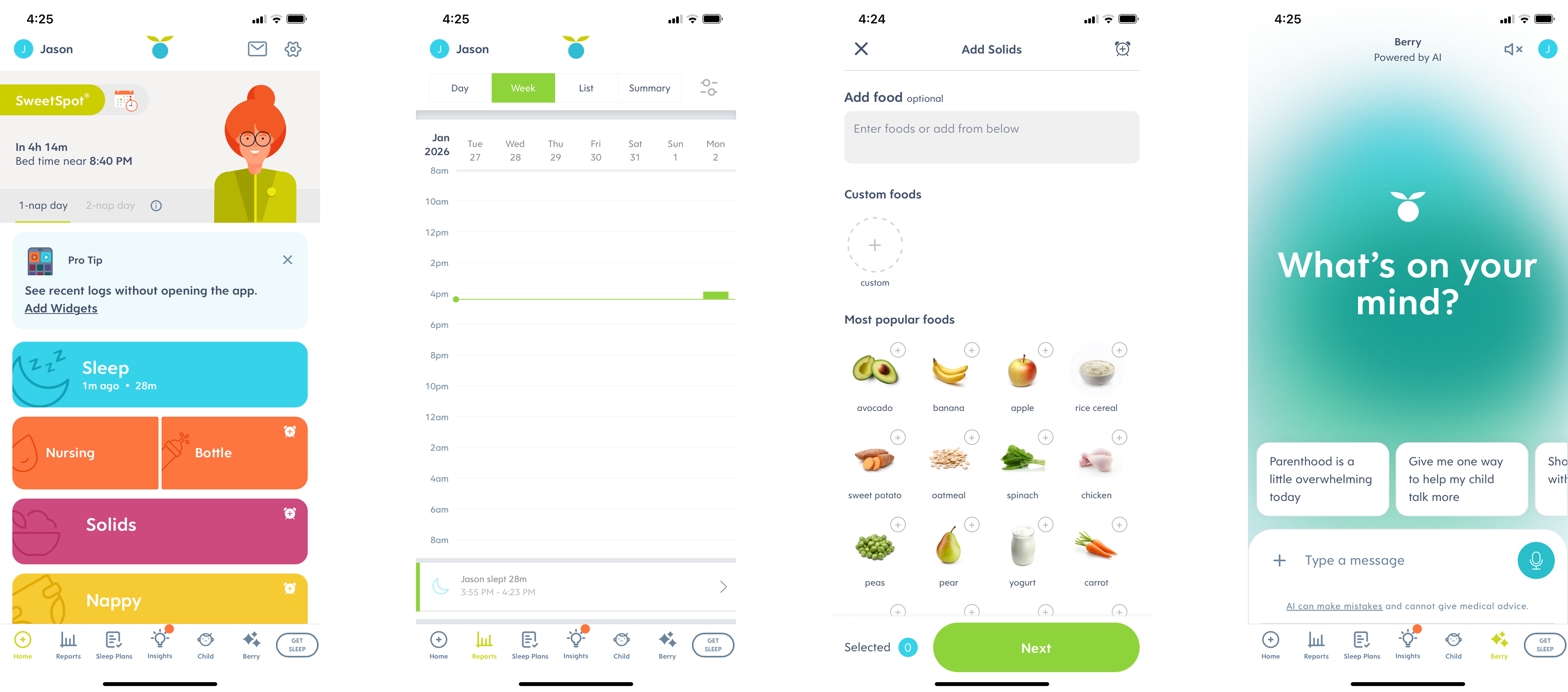
Huckleberry App – Baby Tracker & Sleep Experts
Observation: very reliant on self-inputs (sleep. food and others). However can add to overwhelming responsibility.
Early Years SA App – Information you can trust at your fingertips
Observation: gives parents a lot of access to different resources from medical to advice separated by age group.
Baby Makes 3 – Discussion based program for new parents
Observation: an in-person service funded by the government. Time consuming and can be daunting opening up to strangers.
Baby Makes 3 is a three-week (3 x 2 hours) discussion-based program for first time parents that focuses on maintaining equal and respectful relationships after the birth of a baby.

Parents attend three evening or weekend sessions with their babies, with 6 – 12 other families."

With these solutions, why do new parents still struggle with the early stages of parenthood?

Validating Assumptions

Who struggles with early parenthood and why do they?

This phase aimed to validate initial assumptions by identifying the key drivers of early parenthood struggles, while also addressing common questions and uncertainties that could challenge the relevance of the proposed solution.
Why do some new parents need support while some others don't?
Research indicates that in many Asian cultural contexts, post-partum care is embedded within strong family and community traditions. These support structures provide new parents with practical and emotional assistance, which has been associated with lower reported levels of post-partum anxiety and depression.

This was reinforced in my interviews with new parents:
Our families have been incredibly helpful with bringing us meals”
Why don’t parents just reach out for help?
We explored why people often avoid reaching out for support and identified two recurring reasons:
  • They don’t want to feel like a burden
  • They feel they should be able to manage on their own
These themes were reinforced through interviews, with multiple participants expressing similar sentiments with one participant sharing:
I had post-partum depression with both my kids, and I remember just staring at my phone contemplating whether I should call my friends for help”

What about using professional services?
We found that many new parents are hesitant to use professional childcare services due to low trust and financial constraints. Instead, parents often prefer to rely on people they already know and trust. One participant explained:
I’d rather leave my child with my mum or someone I know rather than paying someone”

This highlights the role of social and practical support in shaping parental wellbeing outcomes.

User Journey Map

New parents struggle to ask for help

We wanted to identify the opportunities to where we could intervene and create a solution.

In an average day, new parents are overwhelmed with responsibilities and relationship dynamics, and this strain often isn’t eased until they can ask for help.
Pain Points

Parents need easy ways to access trustworthy support without the pressures of feeling like a burden

Although new parents have access to family and friends to ease their load, they more often than not, don't reach out for support. Our solution needs to oversome this and help parents reach out to their trusted friends and family without feeling like a burden.
Persistent overload
Parents are constantly juggling care, housework, work, and personal wellbeing, leading to ongoing mental load and trade-offs that compound fatigue and stress.
Uneven adjustment
Parents feel pressure to adapt quickly and “cope well,” despite experiencing deeply uneven emotional and practical transitions into parenthood.
Relationship strain
Couples struggle to renegotiate roles, fairness, and communication in early parenthood, often leading to tension driven by unspoken expectations and uneven task distribution.
Friction in seeking external help
Parents avoid seeking help due to cultural expectations, fear of burdening others, lack of trust in professional services, and overwhelming or conflicting advice.
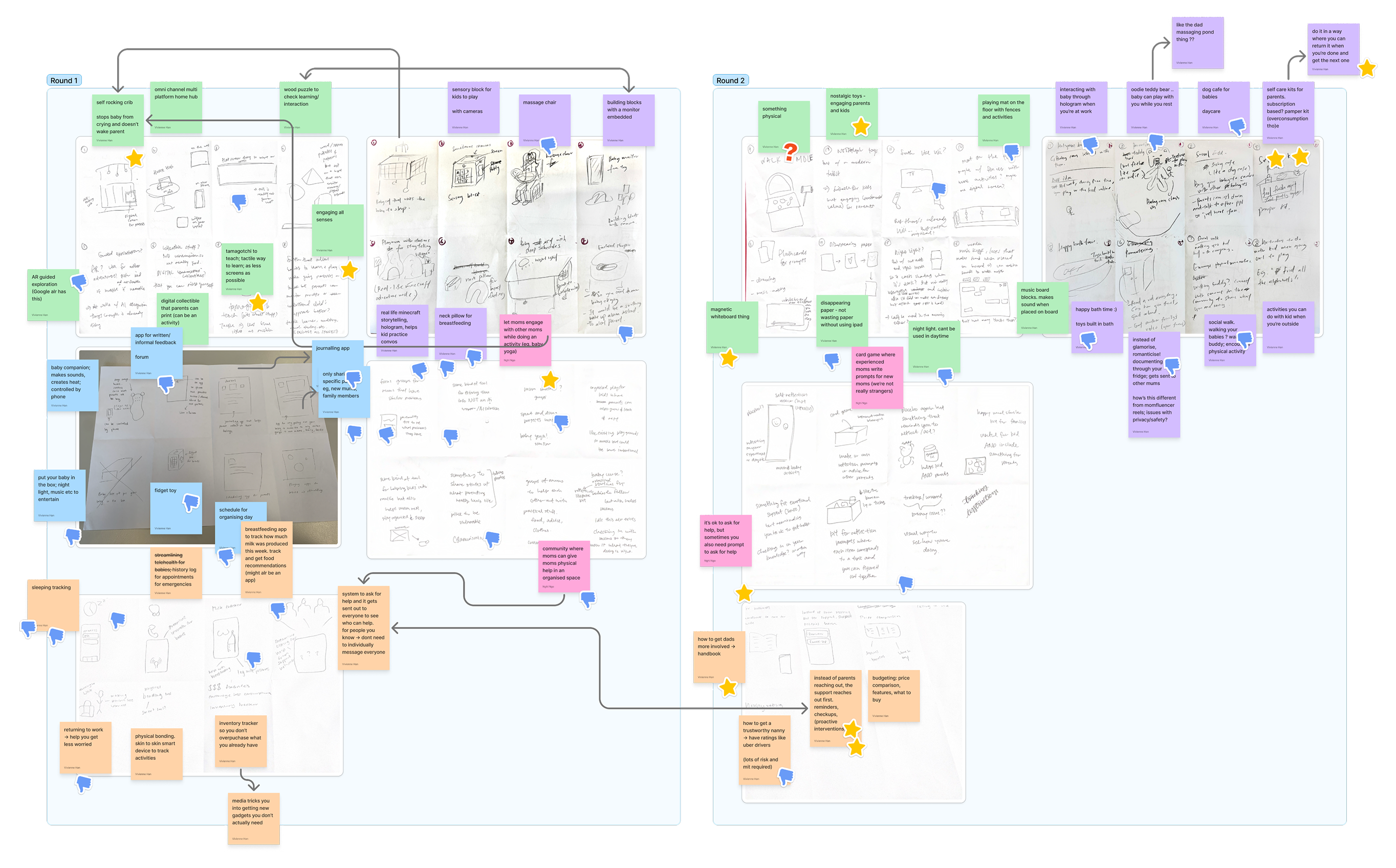
Ideation

How can we address these paint points?

To help facilitate the generation of ideas, we took a holistic approach and broadened our scope to consider multiple solutions.
Initial Concept

An all-encompassing help app

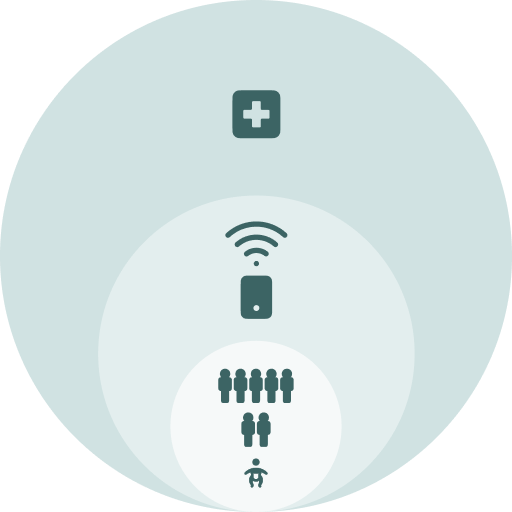
In the early stages, our concept of “circles” reflected different levels of closeness in the types of help parents seek, from immediate family and friends to broader online communities and professional support.

However, as we developed this concept further, we noticed that having an “all-encompassing app” meant that we couldn’t fully address each pain point without our app becoming overloaded with content and features. This would ultimately not allow us to solve any of our users’ problems meaningfully.
Initial Concept
Outer Circle: professional help, doctors
Middle Circle: social media, online communities
Inner Circle: family and friends, spouse, baby
Current Concept
Outer Circle: family and friends
Middle Circle: spouse/co-caretaker
Inner Circle: your baby
Feature Prioritisation

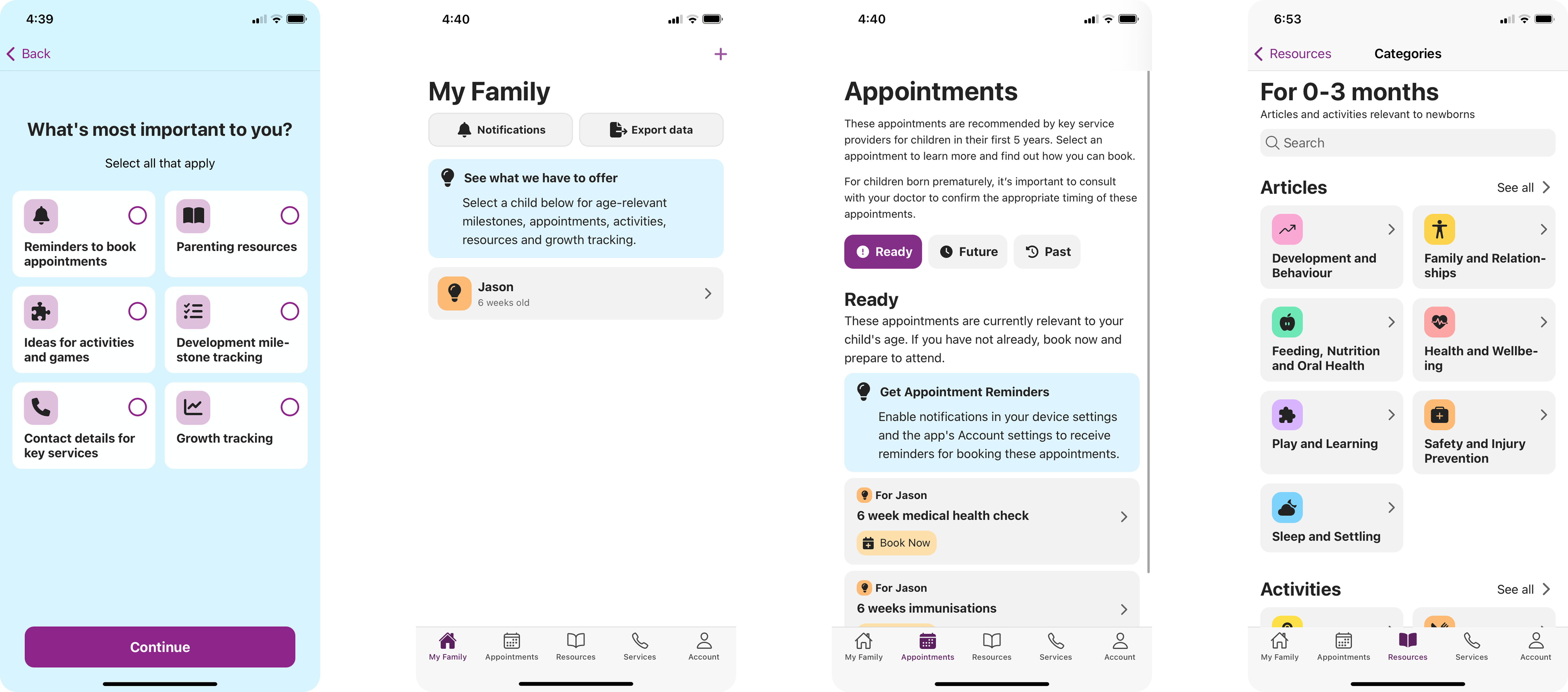
Consideration for our persona's context directed a user flow focusing on minimising steps and time

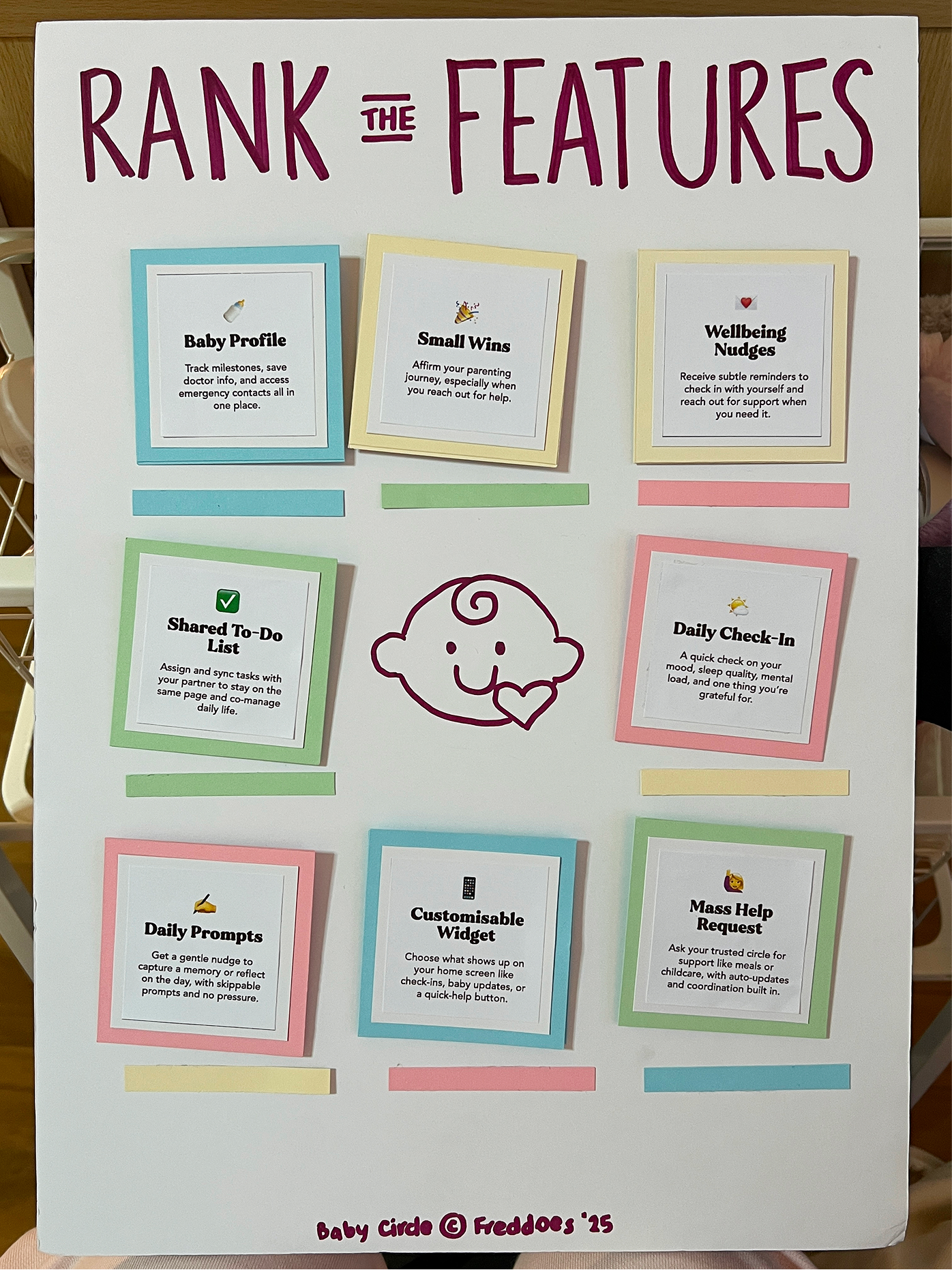
To do this, we first narrowed down our features with impact and effort matrix – which features would give the best results without beingtoo unrealistic to build?

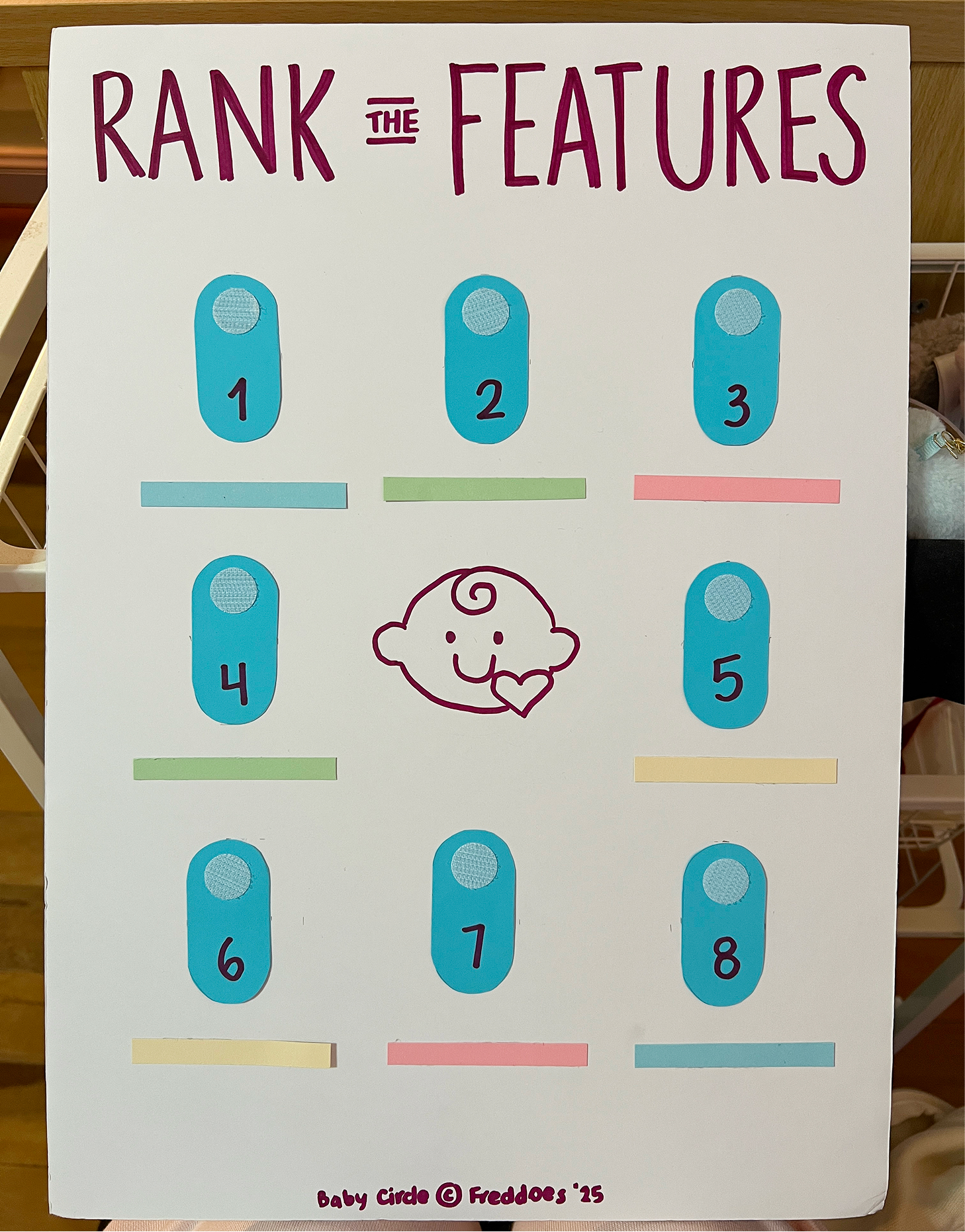
Then, we conducted user testing with 11 participants, asking them to rank the features according to which they saw as most valuable in the context of being a new parent.
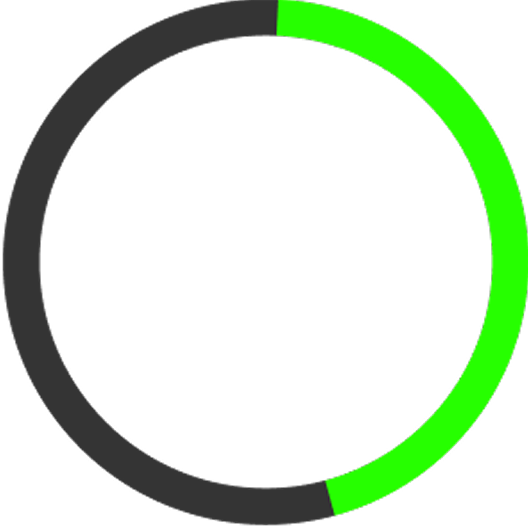
45%
Shared to do list
Ranked 1st by 5 participants and unanimously within the top 4
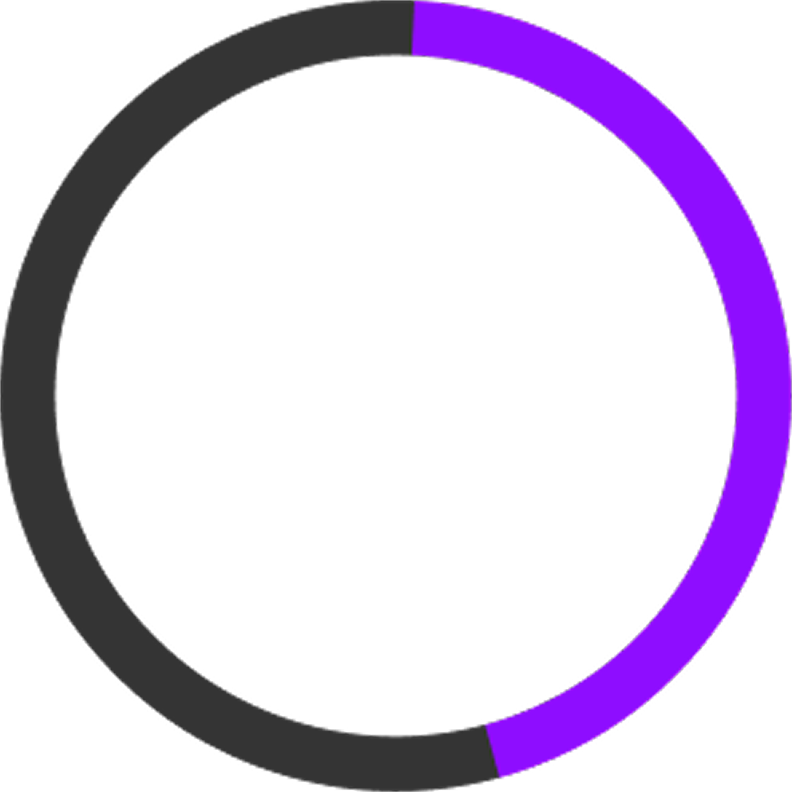
36%
Mass help request
Ranked 1st by 4 participants and unanimously within the top 4
45%
Daily check in
Ranked 4th by 5 participants and unamimously within the top 4
18%
Baby profile
Ranked 3rd by 3 participants and unamimously within the top 4
System Architecture

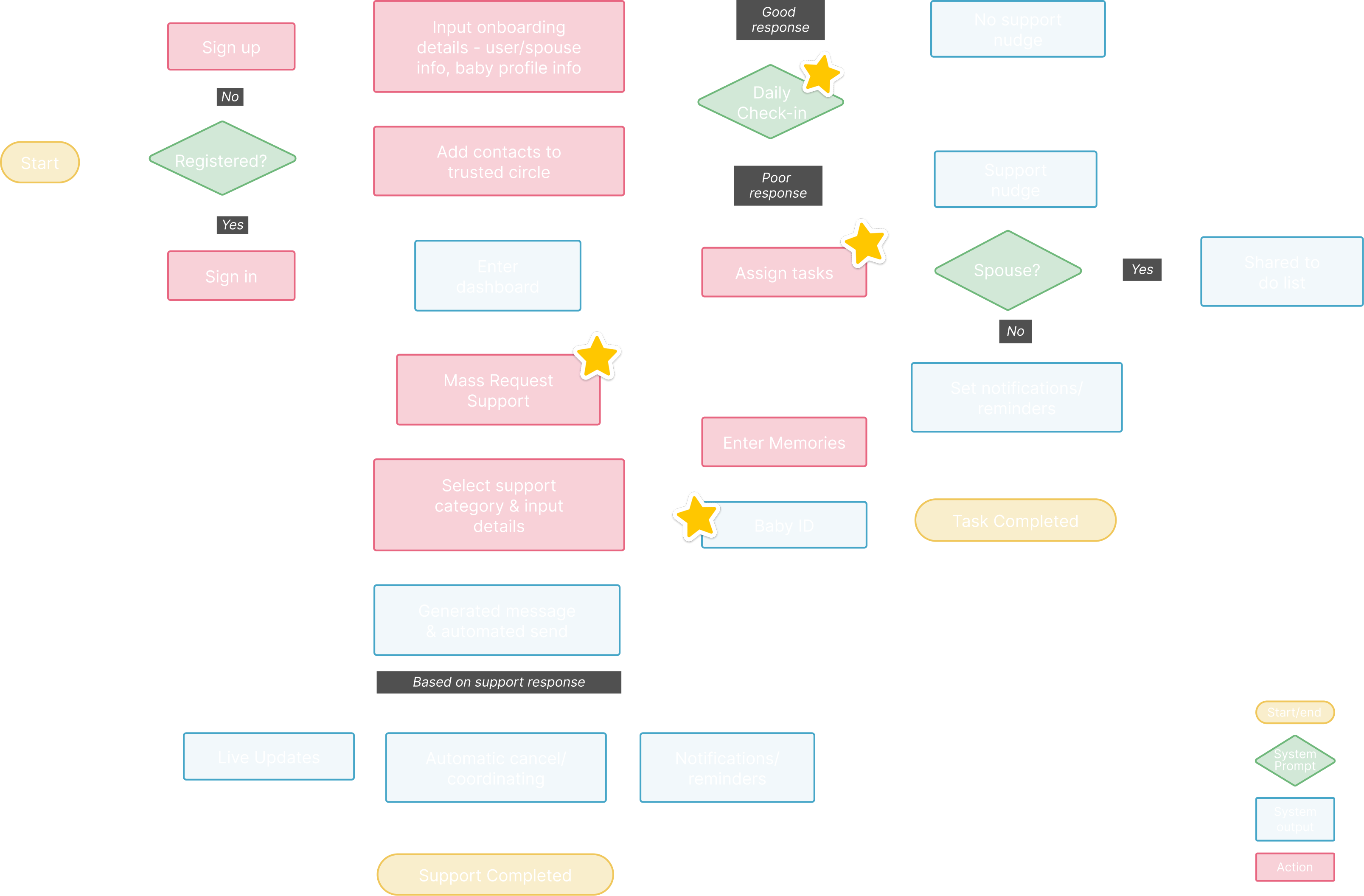
Considering pain points and feature prioritisation, this guided a user flow centred around easy access to high priority features

We then mapped out the user flow that allowed users to easily access key features in the least number of steps and time. Since users are more likely to use main features over secondary, the reduce overload and distraction, we limited the home screen to the bare necessity.
Wireframes

I need help, but I don't want to be a burden to others

By automating help requests and sending them to multiple people at once, research and usability testing showed a reduction in parents’ feelings of “being a burden.”

For recipients, this approach also reduced the guilt associated with rejecting requests.

I’m doing all the work and my partner is neglecting their responsibilities

By introducing a shared, coordinated to-do list, couples were able to visualise responsibilities and distribute tasks more transparently. This visibility helped reduce feelings of unfairness and imbalance by making contributions to the household explicit and shared.

I want to keep track of my baby’s milestones

Iterations

Usability testing and a quest for aesthetic design

Our usability testing helped to identify points of friction, alongside ongoing refinement of the visual and interaction design. The goal was to create an interface that felt intuitive, emotionally considered, and trustworthy under conditions of stress and fatigue.
1. Minimising steps
To improve user flow and reduce frictions, I reduced the flow of creating a mass help request into one screen.
2. Improving hierarchy
To improve readability, I adjusted text font weights and sizes as well as repositioning text.
Final Frames

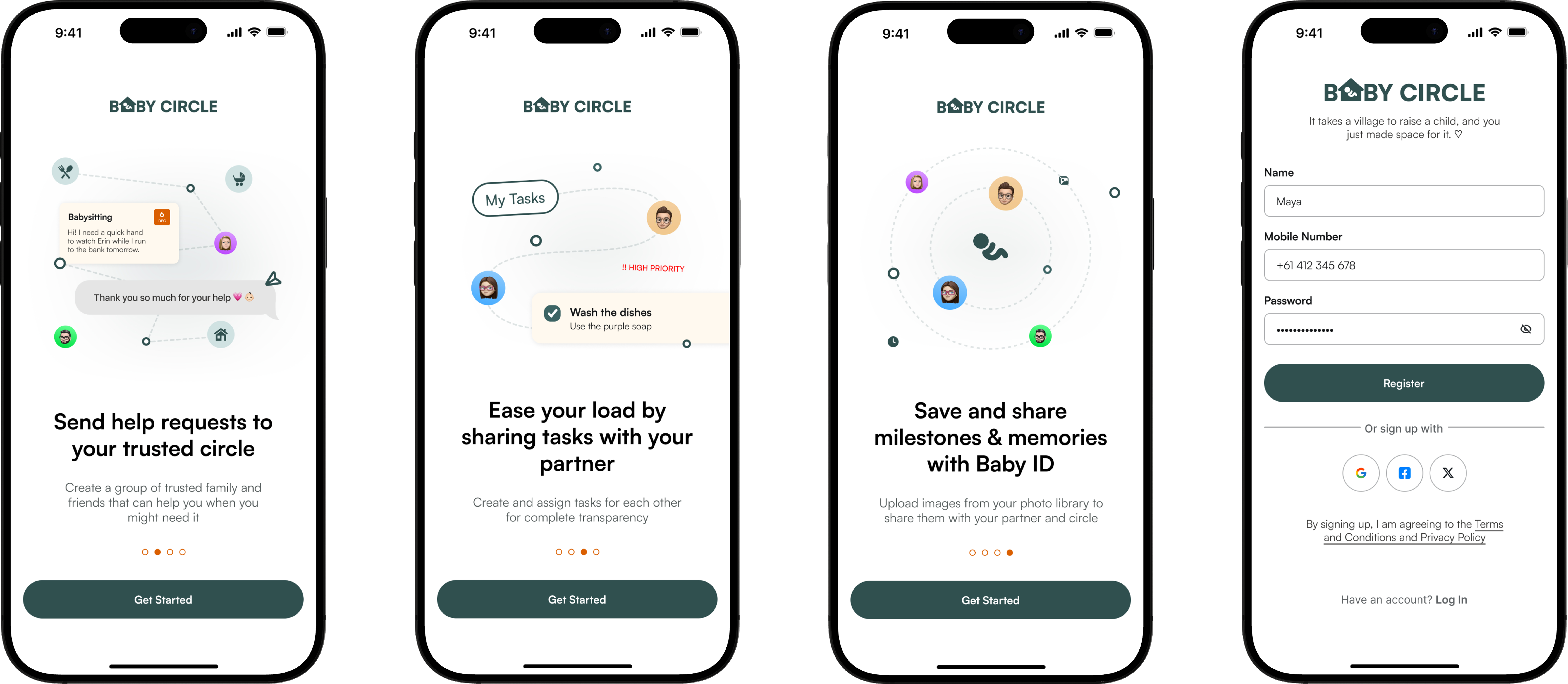
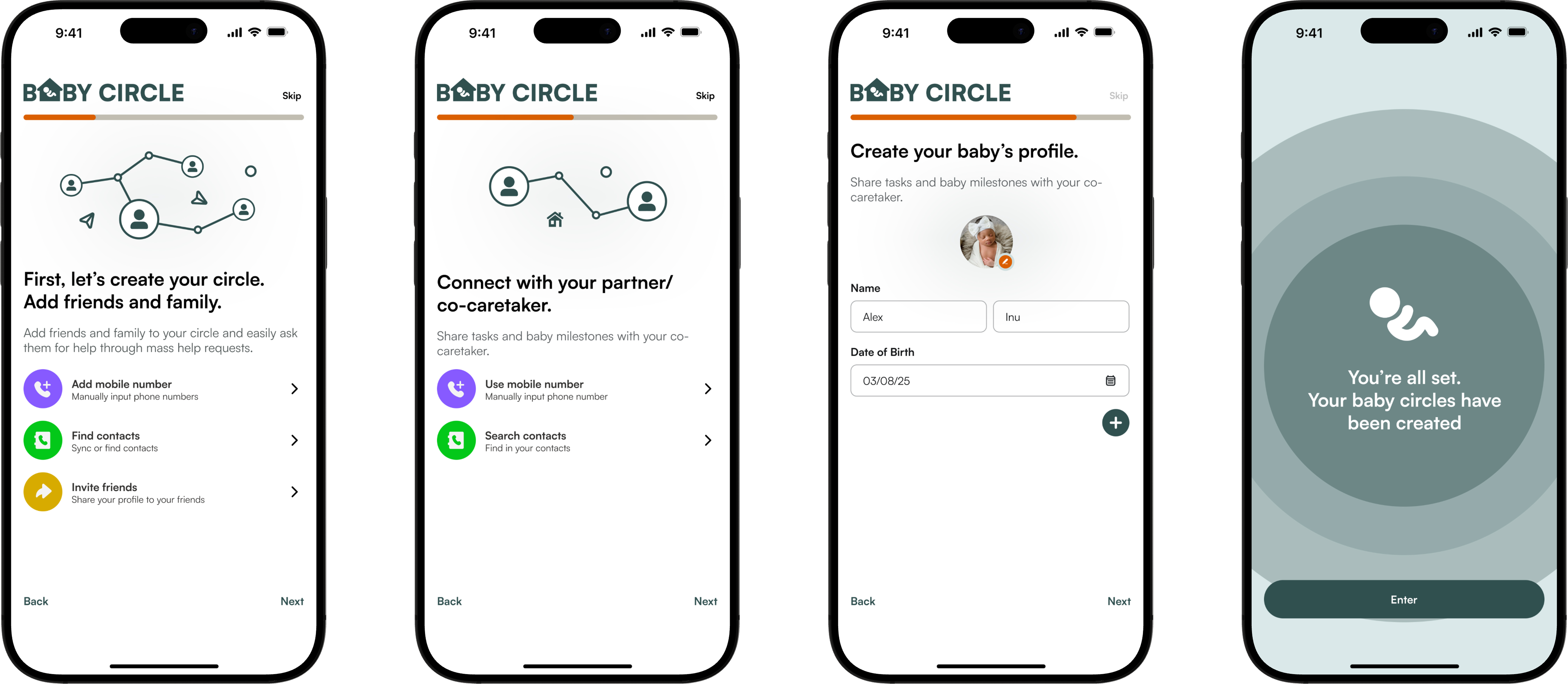
Onboarding

Home & Mass Help Request

Shared To-do List

Baby ID

IMPACT
My Impact

How my work impacted the project

Translated literary research findings surrounding parental pain points into digestible insights that validated assumptions and guided ideation.
Led decisions towards the final visual design to balance usability, emotional warmth, and trust.
Key Learnings

The lessons I took from this project

Simplifying decisions
Simplifying ideas and solutions are more valuable for functionality, especially in contexts where high stress in involved to reduce cognitive load.
Behavioural barriers
Designing for behaviour, not just functionality, in this context proved critical in addressing real user needs. Therefore, extensive research and usability testing was necessary.
Next project